QUICK ENQUIRY

Let's Discuss Your Requirement

Share your machinery or plant requirement and our team will contact you with the right solution.

Fast Response
Expert Support
Water Treatment & Bottling Solutions

Water Treatment Solutions

Uncategorized

Uncategorized

Packaged Drinking Water Plant

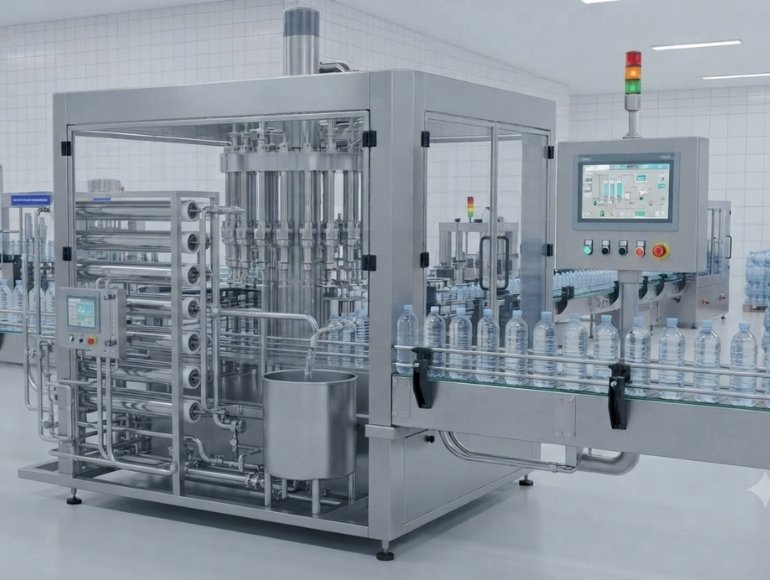
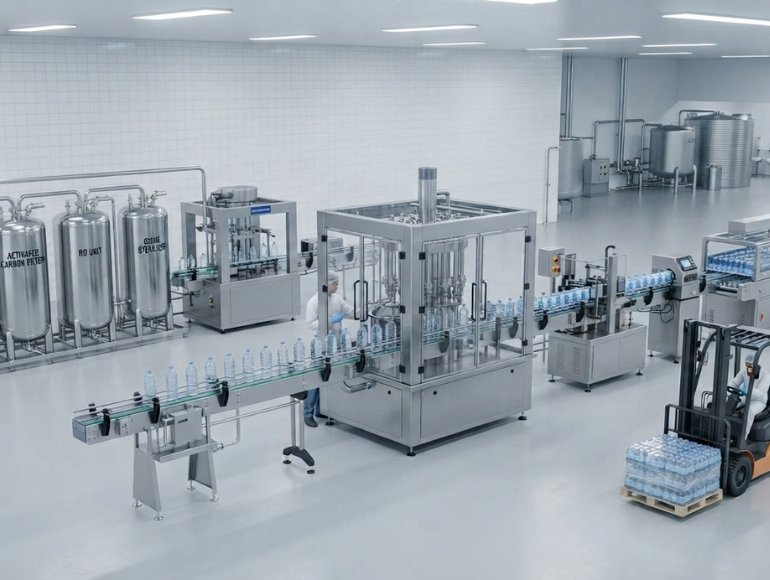
How to Start a Packaged Drinking Water Plant in India: Complete Guide How to Start a Packaged Drinking Water Plant in India Starting a Packaged Drinking Water Plant in India requires careful planning of water treatment, bottling, packaging, utilities and production capacity. A complete project may include raw water analysis, filtration, RO treatment, purified water storage, bottle rinsing, filling, capping, labeling and final packaging. The right plant configuration depends on raw water quality, bottle sizes, required production output, available space and automation level. Businesses should also consider future expansion before selecting equipment. This guide explains the main stages involved in setting up a packaged drinking water production facility. Water Treatment for a Packaged Drinking Water Plant Water treatment forms the first major stage of a Packaged Drinking Water Plant. Businesses should test the raw water before selecting purification equipment because water quality can vary greatly by source. A typical treatment process may include sand filtration, activated carbon filtration, micron filtration and reverse osmosis. Some projects may also require additional purification stages based on raw water conditions and production requirements. A suitable treatment system helps supply treated water continuously to the bottling section. RO System and Purified Water Storage Reverse osmosis plays an important role in many packaged drinking water projects. The RO system helps reduce dissolved impurities before the water moves to the next treatment or storage stage. After purification, the system transfers treated water to a suitable storage tank. The storage system should support the required production capacity and maintain a steady supply to the filling machine. Businesses should match the RO plant capacity with the expected bottling output. Bottle Filling and Packaging Machinery After water treatment, the production process moves to bottle filling and packaging. Businesses can choose automatic or semi-automatic filling equipment based on their production targets. A complete bottling line may include: Bottle rinsing Water filling Bottle capping Labeling Batch coding Shrink wrapping Conveyor systems Automatic machinery can reduce repeated manual handling and improve production flow. Packaged Drinking Water Plant Capacity Selecting the correct Packaged Drinking Water Plant capacity is an important project decision. Businesses should calculate production requirements based on bottle size, daily demand, operating hours and expected future growth. They should also match the capacity of the water treatment system with the filling and packaging equipment. A high-speed filling machine will not improve total output if other machines operate much slower. Balanced machine capacities help create a smoother production line. Plant Layout and Utility Planning A practical layout helps organize machinery, operators and material movement inside the plant. Businesses should allocate space for: Water treatment equipment RO system Storage tanks Bottle filling machinery Labeling equipment Packaging section Finished product storage Operator movement They should also plan electricity, drainage, water supply and maintenance access during the layout stage. Choosing Machinery for a Packaged Drinking Water Plant Businesses should not select machinery only according to initial price. They should compare machine capacity, construction, automation level, maintenance needs and compatibility with other equipment. Bottle size and format also influence equipment selection. Therefore, businesses should finalize the intended bottle range before selecting rinsing, filling, capping and labeling machines. Proper equipment matching can reduce production bottlenecks later. Water Treatment and Bottling Machinery Allpack Engineers provides machinery for water treatment, RO purification, bottle filling and packaging applications. The equipment range can support different packaged drinking water production requirements. Businesses can discuss raw water quality, bottle format, required capacity and automation needs before selecting a suitable machine configuration. About Allpack Engineers Allpack Engineers operates from Ahmedabad, Gujarat, India. The company supplies water treatment, RO, bottle filling, PET blowing, labeling and packaging machinery. Its equipment supports different stages of packaged drinking water production. Businesses can select machinery according to their required production capacity and project configuration. Plan Your Packaged Drinking Water Plant in India If you are planning a Packaged Drinking Water Plant in India, begin with raw water testing and production-capacity planning. Next, define your bottle sizes, operating hours, automation requirements and available factory space. These details make it easier to select compatible treatment, filling and packaging machinery. Allpack Engineers can help businesses explore suitable equipment for new packaged drinking water projects and plant expansion requirements. Why Choose Allpack Engineers? Allpack Engineers provides water treatment, RO, bottle filling, PET blowing, labeling and packaging machinery from Ahmedabad, Gujarat. Businesses can select plant configurations according to raw water characteristics, required output, bottle format, automation level and available production space.
Uncategorized

Automatic Bottle Filling Machine

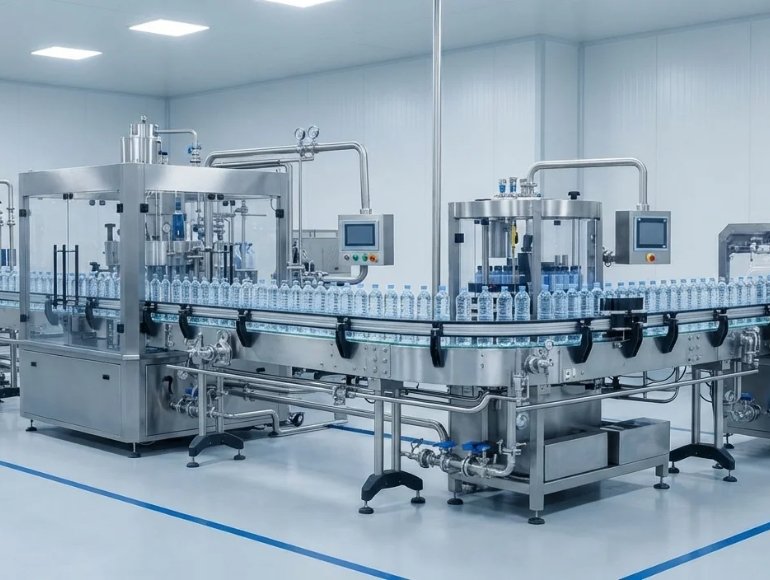
Automatic Bottle Filling Machine: Working, Benefits and Applications Automatic Bottle Filling Machine An automatic bottle filling machine helps manufacturers fill bottles quickly and systematically. The machine automatically handles bottles and transfers liquid into each container. It reduces repetitive manual work and supports continuous production. Manufacturers commonly use these machines for packaged drinking water, mineral water, beverages, fruit juice, edible oil, and other suitable liquids. How an Automatic Bottle Filling Machine Works The machine moves empty bottles through a conveyor system and places them under the filling nozzles. The filling system then transfers the required liquid into each bottle. After filling, the conveyor moves the bottles toward the next production stage. Manufacturers can connect the machine with rinsing, capping, labeling, coding, and packaging equipment to create a complete bottling line. Benefits of Automatic Bottle Filling Equipment Automatic filling equipment helps manufacturers reduce manual bottle handling and improve production flow. The system performs repeated filling operations with minimal operator involvement. It also supports continuous production when businesses need regular bottle output. Manufacturers can integrate the machine with other bottling equipment to create an organized production process. Automatic Bottle Filling Machine Capacity Production requirements determine the correct machine capacity. Allpack Engineers offers an automatic bottle filling machine with a capacity of approximately 24 to 90 bottles per minute, depending on the selected model and configuration. Buyers should consider bottle size, filling volume, liquid type, working hours, and daily production targets before selecting a machine. Automatic Water Bottle Filling Machine An automatic water bottle filling machine can become an important part of a packaged drinking water or mineral water plant. A complete production line may include water treatment, purified water storage, bottle rinsing, filling, capping, labeling, coding, and packaging. Matching the capacity of each machine helps maintain a smooth production flow and reduces bottlenecks. How to Select the Right Filling Machine Businesses should check bottle size, bottle shape, neck dimensions, liquid type, and required production capacity before buying a filling machine. They should also review the available factory space and desired automation level. Existing rinsing, capping, labeling, and shrink-wrapping equipment should work at a compatible production speed. Buyers should also consider future expansion when planning a new bottling line. Automatic Bottle Filling Machine Manufacturer in India Allpack Engineers supplies automatic bottle filling machines and related bottling equipment from Ahmedabad, Gujarat, India. The company provides solutions for packaged drinking water, mineral water, and other suitable liquid-filling applications. Businesses looking for an automatic bottle filling machine manufacturer in India can share their bottle size, liquid type, required capacity, and bottling line requirements with the Allpack Engineers team to select a suitable configuration.

Uncategorized

RO Plant for Drinking Water

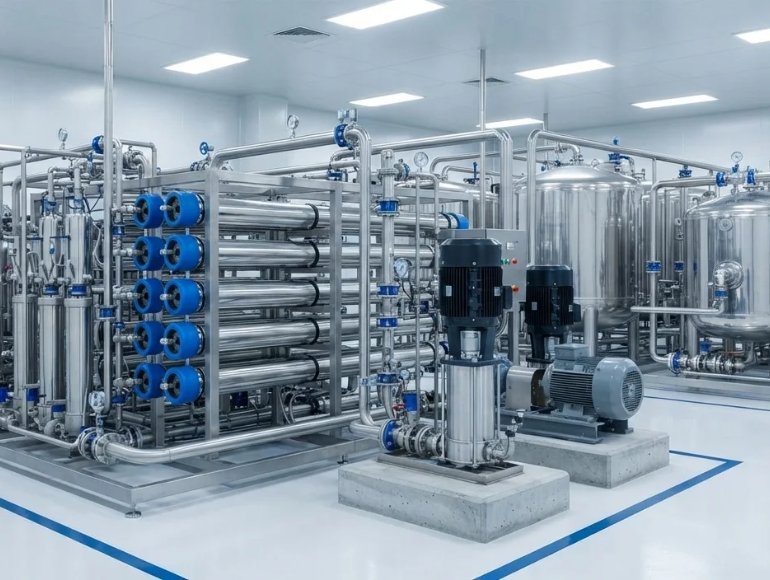
RO Plant for Drinking Water: Working, Benefits and How to Choose the Right Capacity RO Plant for Drinking Water A RO plant for drinking water plays an important role in commercial and industrial water purification. Reverse osmosis technology removes many dissolved impurities from water through a semi-permeable membrane. The system uses pressure to push water through the membrane and separate unwanted dissolved substances. Businesses often use RO systems as part of a larger water treatment process. The complete setup depends on raw water quality and the required treated-water standard. In packaged drinking water projects, manufacturers usually combine the RO plant with filtration, storage, filling, and packaging equipment. Raw Water Quality and Pre-Treatment The first step in selecting an RO plant is checking the raw water quality. Borewell water, municipal water, and other sources can contain different levels of dissolved solids, hardness, iron, and turbidity. A water analysis helps determine the correct treatment process. Based on the test results, the system may include sand filtration, activated carbon filtration, micron filtration, and other pre-treatment stages. Proper pre-treatment also helps protect the RO membranes and support stable operation. RO Plant Capacity in LPH RO plant capacity usually appears in litres per hour (LPH). Businesses should select the required capacity according to their daily purified-water demand. A small commercial application may need a lower-capacity system. In comparison, packaged drinking water plants and industrial facilities may need a much larger RO plant. Buyers should also consider working hours, storage capacity, future demand, and downstream bottling equipment. How an RO Plant Works in a Drinking Water System A typical RO system uses a high-pressure pump to move pre-treated water through RO membranes. The membrane separates purified water from a concentrated reject stream. The treated water can then move to a storage tank or another purification stage. In a drinking water plant, the process may continue through rinsing, filling, capping, labeling, and packaging. Benefits of an RO Plant for Drinking Water A properly configured RO system can support a controlled water purification process. It helps reduce dissolved substances and improves the quality of water before the next production stage. Businesses can also connect the RO system with storage tanks and bottling equipment. This integration helps create a more organized production line. Proper capacity matching also helps reduce delays between water treatment and bottling operations. RO Plant Maintenance Regular maintenance helps an RO plant operate reliably. Operators should inspect filters, membranes, pumps, and other components at suitable intervals. Good pre-treatment can also help protect the RO membrane from unnecessary fouling or scaling. Operators should monitor water quality, pressure, flow, and other important performance parameters. These checks can help identify maintenance needs before they affect production. RO Plant for Drinking Water in India Allpack Engineers provides industrial RO plants, commercial water treatment systems, and related machinery for water purification projects. The company supports businesses that need equipment for packaged drinking water and other suitable applications. If you are planning a RO plant for drinking water in India, start with a proper raw-water analysis. You should also define the required LPH capacity, operating hours, storage needs, and complete production flow before selecting the equipment.

Uncategorized

Mineral Water Bottling Plant

Mineral Water Bottling Plant: Machines, Process and Complete Setup Guide Mineral Water Bottling Plant A mineral water bottling plant combines water treatment and packaging machinery to produce bottled water in an organized production line. The complete setup may include water purification, treated-water storage, bottle rinsing, filling, capping, labeling, and secondary packaging. Businesses should select the plant configuration according to production capacity, bottle size, raw-water quality, and project needs. Good planning helps create a smooth production flow from water treatment to final packaging. Water Treatment Process The water treatment section forms the foundation of a mineral water bottling plant. The treatment process may include filtration, activated carbon treatment, micron filtration, and reverse osmosis. The exact process depends on the quality of the source water. Businesses should test the raw water before selecting treatment equipment. The test results help determine the correct filtration and purification stages for the project. Bottle Rinsing, Filling and Capping After treatment, the water moves to the bottle rinsing, filling, and capping section. The production line first carries empty bottles to the rinsing system. The filling machine then fills each bottle with treated water. After filling, the capping system closes the bottles. Automatic rinsing, filling, and capping equipment can reduce manual handling and improve production flow. Labeling and Packaging After capping, the production line moves bottles toward the labeling section. The labeling machine applies the required product label to each bottle. Packaging equipment can then group bottles for storage, transport, or distribution. Businesses may also add shrink wrapping, coding, and conveyor systems according to production needs. Mineral Water Bottling Plant Capacity Plant capacity plays an important role in project planning. Businesses may measure output in bottles per minute or bottles per hour. Before selecting a plant, businesses should review market demand, bottle size, working hours, available factory space, and future expansion plans. The water treatment system, filling machine, and packaging equipment should support similar production speeds. Importance of Equipment Matching Every machine in the bottling line should work at a compatible speed. A fast filling machine cannot improve total production if the labeling or packaging section operates much slower. Matching the capacity of each machine helps reduce production delays and improves material flow. It also helps businesses use available machinery more effectively. Mineral Water Bottling Plant in India Allpack Engineers provides mineral water bottling plants, bottle filling machines, RO plants, water treatment systems, and packaging machinery from Ahmedabad, Gujarat, India. Businesses planning a mineral water bottling plant in India can discuss their bottle size, required output, raw-water quality, and plant layout with the Allpack Engineers team. This approach helps identify suitable water treatment, filling, and packaging equipment for the complete project.

Scroll to Top