How to Calculate Bottling Plant Capacity: BPM, LPH & Production Planning
Planning a packaged drinking water facility? Understanding bottling plant capacity calculation is essential for selecting suitable water treatment, bottle filling and packaging equipment.
Whether you are starting a new mineral water bottling business or expanding an existing production facility, calculating the required production capacity helps avoid equipment mismatches and unnecessary bottlenecks.
In this guide, Allpack Engineers explains how to calculate bottles per minute (BPM), litres per hour (LPH), daily production output, and important considerations when planning a water bottling line.
What Is Bottling Plant Capacity?
Bottling plant capacity refers to the quantity of packaged water that a production system can process during a specific period.
Water bottling operations generally use two different capacity measurements. Bottle filling machines are commonly rated in bottles per minute, while water purification systems are rated in litres per hour.
For example, a bottle filling machine operating at 60 BPM has a theoretical capacity of 3,600 bottles per hour.
However, actual production depends on several operational factors, including machine efficiency, bottle size, maintenance requirements, production interruptions and downstream packaging performance.
Why Is Capacity Calculation Important?
- Helps determine the required bottle filling machine capacity.
- Supports suitable RO plant and water treatment equipment selection.
- Helps estimate hourly and daily production.
- Reduces the risk of production bottlenecks.
- Supports better scheduling and future expansion planning.
Understanding BPM and LPH in Water Bottling Plants
What Is BPM?
BPM stands for bottles per minute. It represents the number of bottles processed by a filling machine within one minute under specified conditions.
For example, a machine operating at 30 BPM can theoretically process 1,800 bottles per hour. A machine operating at 60 BPM can theoretically process 3,600 bottles per hour.
What Is LPH?
LPH stands for litres per hour. It is widely used to describe the water treatment capacity of equipment such as industrial RO plants and filtration systems.
A 2,000 LPH water treatment system has a nominal treated-water output of 2,000 litres per hour under its specified operating conditions.
BPM and LPH are related through the bottle filling volume, but they should not be treated as identical capacity measurements.
How to Calculate Bottling Plant Capacity
The basic bottling plant capacity calculation uses the filling machine speed, bottle volume and planned production hours.
Step 1: Calculate Hourly Bottle Production
Consider a bottle filling machine rated at 60 bottles per minute.
60 × 60 = 3,600 bottles per hour.
Step 2: Calculate Hourly Water Requirement
If the machine fills 1-litre bottles at 60 BPM, the theoretical hourly water filling requirement is 3,600 litres.
For 500 ml bottles, the same filling speed corresponds to a theoretical water filling requirement of 1,800 LPH.
Step 3: Estimate Daily Production
Suppose a filling machine operates at 60 BPM for eight hours per day. If the assumed effective production factor is 85%, estimated daily output is:
60 × 60 × 8 × 0.85 = 24,480 bottles per day.
Water Bottling Plant Daily Production Planning
Daily bottling output is influenced by production speed, operating duration and overall line efficiency.
The following table compares theoretical output at different filling speeds and provides estimated production using an assumed 85% efficiency factor.
| Machine Speed | Bottles / Hour | 8-Hour Theoretical Output | Estimated Output at 85% |
|---|---|---|---|
| 30 BPM | 1,800 | 14,400 | 12,240 |
| 60 BPM | 3,600 | 28,800 | 24,480 |
| 90 BPM | 5,400 | 43,200 | 36,720 |
| 120 BPM | 7,200 | 57,600 | 48,960 |
These examples are useful for initial capacity estimation. Actual production can vary because of maintenance, machine adjustments, stoppages, container handling and other operating conditions.
Factors Affecting Daily Production
- Filling machine operating speed.
- Bottle size and container design.
- Daily working hours and shift arrangements.
- Availability of treated water.
- Machine downtime and maintenance.
- Capping, labelling and packaging capacity.
- Overall production line efficiency.
How to Select the Right RO Plant Capacity
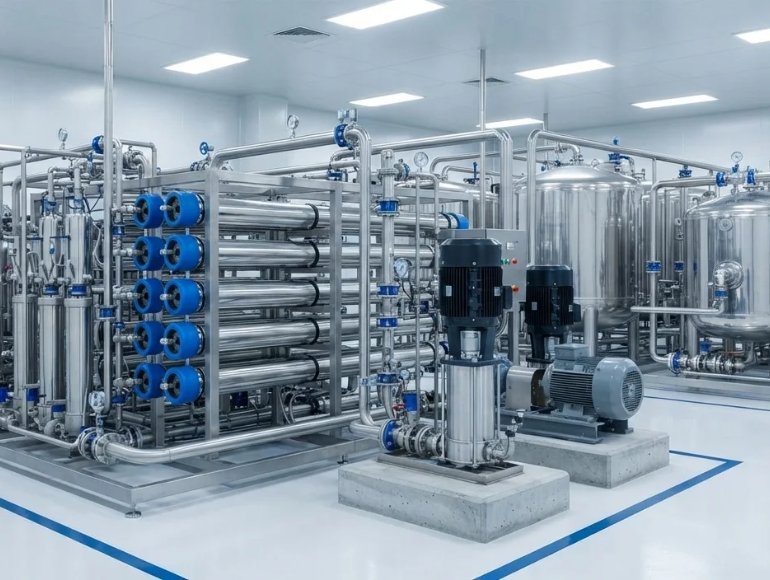
Selecting a suitable RO plant is an important part of bottling plant planning. The treatment system must be capable of supplying the required volume of finished water according to the production schedule.
However, a bottling machine's theoretical water filling requirement does not automatically determine the final RO plant capacity.
Water treatment capacity must also be evaluated alongside treated-water storage, purification operating hours, raw-water quality and operational water requirements.
Factors to Consider
- Daily treated-water production requirement.
- Filling machine operating schedule.
- Available finished-water storage capacity.
- Raw-water quality and treatment requirements.
- Cleaning, rinsing and other process allowances.
- RO recovery rate and pretreatment system design.
- Future production expansion requirements.
For example, a bottling machine filling 1-litre bottles at 60 BPM has a theoretical active filling requirement of 3,600 LPH. The corresponding RO system should be selected after evaluating storage capacity, treatment schedules and operational requirements.
Allpack Engineers provides water treatment and RO plant equipment for different industrial and packaged drinking water applications.
Matching Water Bottling Equipment Capacity
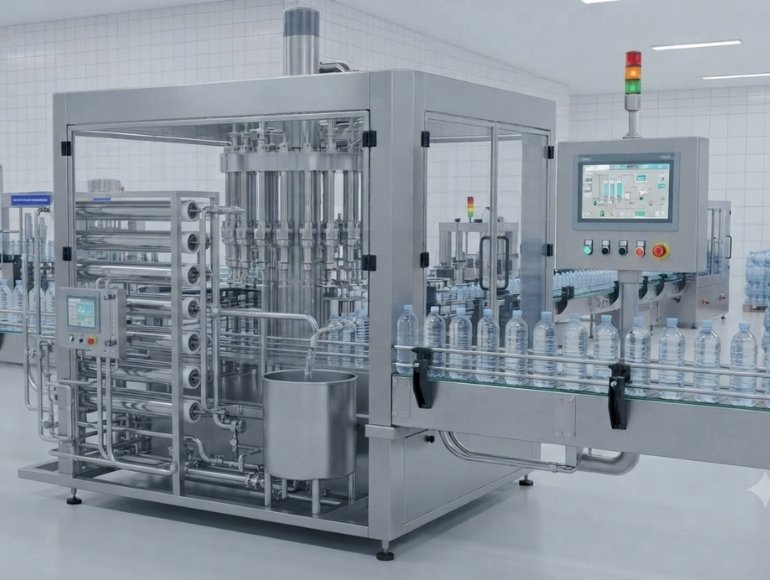
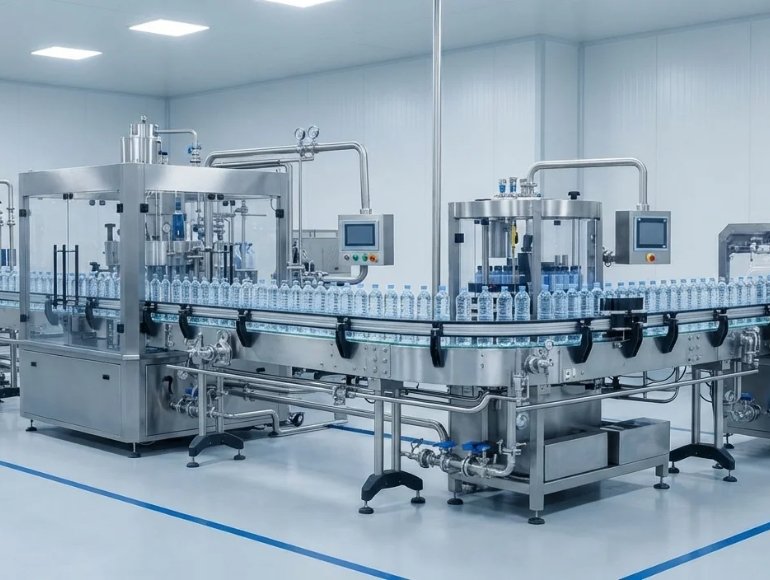
A complete water bottling production line may include water purification, bottle rinsing, filling, capping, inspection, labelling, coding and secondary packaging.
Each stage should be selected according to the required production output and compatibility with connected equipment.
1. Water Bottle Filling Machine
A water bottle filling machine transfers treated water into containers of the required size.
The suitable machine configuration depends on bottle volume, required filling speed, automation level and production requirements.
2. Rinsing, Filling and Capping Equipment
Integrated rinsing, filling and capping equipment combines several bottle-handling operations into a coordinated production process.
When evaluating these machines, consider rated capacity, bottle compatibility, cap handling and equipment maintenance.
3. Shrink Wrapping Machine
A shrink wrapping machine supports secondary packaging by grouping filled bottles into suitable packs for transportation and handling.
Packaging machines are often rated in packs per minute rather than bottles per minute. Their equivalent bottle-handling capacity depends on the pack configuration.
For example, a machine handling 10 packs per minute with six bottles per pack has a theoretical equivalent capacity of 60 bottles per minute.
4. Production Line Coordination
Effective bottling line performance depends on matching connected equipment capacities. A high-speed filling machine alone cannot ensure higher finished-bottle output if downstream operations create delays.
Common Mistakes in Bottling Plant Capacity Planning
1. Ignoring Actual Production Efficiency
Nominal machine capacity is not always equal to actual daily production. Operating interruptions and routine maintenance should be considered.
2. Selecting Equipment Without Considering Bottle Size
Filling performance can vary according to bottle size, container design and filling system configuration.
3. Incorrect Water Treatment Capacity
Selecting an RO system without evaluating water consumption, treated-water storage and treatment operating schedules can create production challenges.
4. Ignoring Downstream Packaging Equipment
Production output may be restricted when capping, labelling or packaging machinery cannot match the required filling-line speed.
5. Overlooking Future Expansion
Production planning should also consider expected business growth, additional operating shifts and potential changes in bottle formats.
Checklist Before Choosing Water Bottling Machinery
Before purchasing equipment for a new bottling facility, prepare the following project information:
- Target daily production capacity.
- Required bottle sizes and packaging formats.
- Planned production hours and shifts.
- Available raw-water quality test results.
- Factory space and utility availability.
- Preferred automation level.
- Existing equipment and integration requirements.
- Potential future expansion plans.
Clear production requirements help equipment manufacturers evaluate suitable filling, water purification and packaging configurations.
About Allpack Engineers
Established in 2011, Allpack Engineers is a manufacturer and supplier of water treatment, bottling and packaging equipment based in Ahmedabad, Gujarat, India.
Its equipment range includes RO plants, filtration systems, mineral water bottling plants, bottle filling machinery and shrink wrapping machines.
Manufacturers planning a packaged drinking water facility can review the company's industrial equipment range to understand available production and packaging solutions.
Frequently Asked Questions
What does BPM mean in a water bottling plant?
BPM means bottles per minute. It indicates the number of bottles a filling machine can process per minute under specified operating conditions.
How do you calculate bottle filling machine capacity?
Multiply the filling machine speed in BPM by 60 to calculate theoretical hourly bottle output. Multiply the hourly output by working hours and an estimated efficiency factor to calculate daily production.
How many bottles can a 60 BPM machine fill in eight hours?
A 60 BPM machine can theoretically fill 28,800 bottles in eight hours. At an assumed 85% effective production factor, the estimated daily output is 24,480 bottles.
How is BPM converted into LPH?
Multiply BPM by 60 and then multiply the result by the bottle volume in litres. This gives the theoretical hourly water filling requirement.
Is RO plant capacity the same as filling machine capacity?
Not necessarily. RO plant selection depends on required finished-water volume, storage capacity, water treatment operating hours, water quality and other operational requirements.
Where is Allpack Engineers located?
Allpack Engineers is based in Vatva GIDC, Ahmedabad, Gujarat, India, and provides water treatment and bottling equipment.