RO Plant Pretreatment: Why Filtration Matters Before Reverse Osmosis
RO plant pretreatment is a critical part of a properly designed reverse osmosis water purification system. Before raw water reaches the RO membranes, appropriate treatment helps control particles, fouling potential and other conditions that can reduce system performance.
For industrial water treatment and packaged drinking water projects, the correct pretreatment arrangement depends on raw-water characteristics, membrane requirements and operating conditions. This guide explains the common pretreatment stages and what operators should consider before selecting filtration equipment.
What Is RO Plant Pretreatment?
RO plant pretreatment refers to the processes used to condition incoming water before it passes through reverse osmosis membranes. Its purpose is to reduce potential membrane fouling, scaling and chemical damage.
Raw water may contain suspended solids, organic matter, hardness-forming minerals, iron, manganese and other constituents. These characteristics vary considerably between borewell, municipal, surface and other sources.
A pretreatment system is therefore not a fixed sequence of filters for every application. Each stage should address an identified water quality or operational need.
Why Pretreatment Is Important for RO Membranes
1. Reducing Particulate Fouling
Fine suspended particles may accumulate on membrane surfaces or inside feed channels. Suitable filtration helps reduce the particulate load reaching the RO system.
2. Managing Scale Formation
Dissolved minerals can form deposits when their concentrations exceed solubility limits within the RO process. Scale-control measures may include feedwater conditioning, antiscalant dosing or other treatment selected through water chemistry calculations.
3. Preventing Chemical Damage
Certain RO membrane materials are sensitive to oxidants such as free chlorine. Where necessary, properly designed dechlorination should be provided before the membrane stage, with adequate verification and monitoring.
4. Supporting Stable Operating Conditions
Effective pretreatment can help reduce avoidable pressure loss, membrane cleaning frequency and disruptions caused by inconsistent feedwater quality. It cannot, however, eliminate every possible membrane problem.
Common RO Plant Pretreatment Stages
| Stage | Main Purpose | Key Consideration |
|---|---|---|
| Multimedia Filtration | Reduce suspended particles | Filtration loading and backwash design |
| Activated Carbon Filtration | Reduce suitable organic contaminants and chlorine where designed | Contact time, media condition and microbial control |
| Water Softening | Reduce calcium and magnesium hardness | Required when justified by scaling analysis |
| Chemical Conditioning | Control scaling or adjust feedwater chemistry | Correct chemical choice and dosing |
| Cartridge Filtration | Capture residual particles before RO | Appropriate rating and timely replacement |
These treatments are examples rather than a mandatory equipment package. Some feedwater sources may require additional iron removal, ultrafiltration or specialist treatment, while others need a simpler arrangement.
For related equipment, explore the filtration and water treatment systems listed by Allpack Engineers.
How to Select a Suitable Pretreatment System
The selection process should begin with representative raw-water sampling and laboratory testing. Results can help identify the main sources of membrane fouling and scaling risk.
Important Water Parameters
- Turbidity and suspended solids
- Total dissolved solids and conductivity
- pH and temperature
- Total hardness and alkalinity
- Iron and manganese levels
- Silica and other scale-forming constituents
- Residual chlorine or other oxidants
- Organic loading and microbiological concerns
The relevant parameters and acceptance limits depend on the membrane manufacturer's requirements and the overall treatment design.
RO Pretreatment Maintenance Checklist
- Record filter inlet and outlet pressures regularly.
- Follow suitable media backwashing procedures.
- Inspect cartridge filter differential pressure.
- Verify chemical dosing and dechlorination performance.
- Monitor feedwater quality for significant changes.
- Maintain treatment vessels, valves and instrumentation.
- Investigate recurring membrane fouling instead of relying only on frequent cleaning.
RO Plant Pretreatment for Packaged Drinking Water
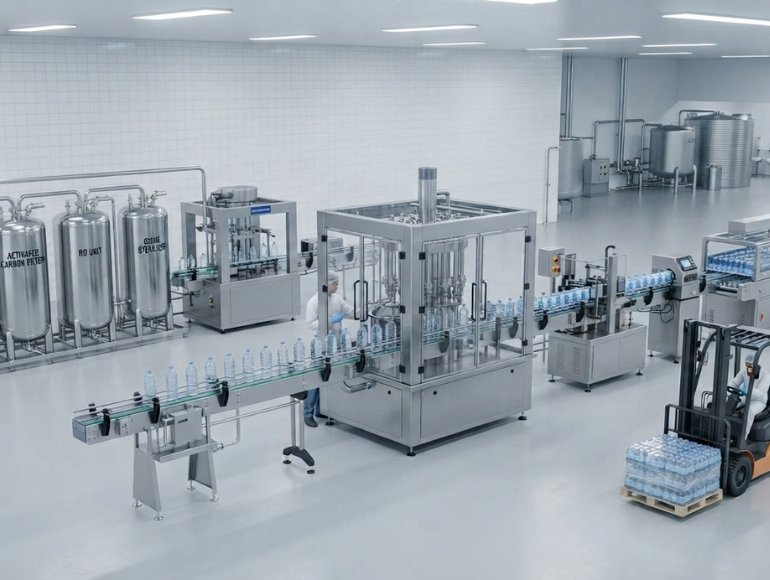
In packaged drinking water production, pretreatment helps prepare raw water for subsequent purification. The complete process may also include RO treatment, suitable post-treatment and hygienic treated-water storage before bottling.
Treatment design must account for the finished-water quality requirements applicable to the intended product. Pretreatment alone does not establish that bottled water is compliant or safe for sale.
Businesses planning integrated equipment can also review the RO Plant Mineral Water product page for plant-selection considerations.
About Allpack Engineers
Allpack Engineers is an Ahmedabad, Gujarat-based manufacturer and supplier of water treatment and bottling equipment. Established in 2011, the company offers RO plants, filtration systems, water purification equipment and machinery for packaged drinking water applications.
For plant planning, operators should share their raw-water analysis, required treated-water output and operating schedule so that suitable equipment can be evaluated.
Frequently Asked Questions
Why is pretreatment required before an RO plant?
Pretreatment helps control particles, scaling potential and substances that may foul or damage RO membranes. The actual requirements depend on feedwater quality.
Is a carbon filter necessary for every RO plant?
No. Carbon filtration is used where its treatment function is appropriate. For example, it may help remove free chlorine that could damage certain RO membranes, but the full design must be evaluated.
What is the purpose of a cartridge filter?
A cartridge filter provides a final particulate filtration stage to help protect downstream equipment. Its micron rating should follow the selected RO system's specifications.
Can pretreatment improve RO membrane life?
Suitable pretreatment can reduce avoidable fouling and chemical exposure. Actual membrane life also depends on correct operation, cleaning and water quality.
How do I choose pretreatment equipment?
Start with laboratory water analysis, required RO capacity, membrane specifications and operating conditions. Select each stage for a defined purpose.